
Big Theme
Reduce, Reuse, Recycle with Captain R!
Issue 28 · Reduce–Reuse–Recycle · 10 min read
Written by Ahmet Selman Yiğit · Pages 4–9
Page 4
Reduce, Reuse, Recycle: The Three R’s to Help Our Planet!
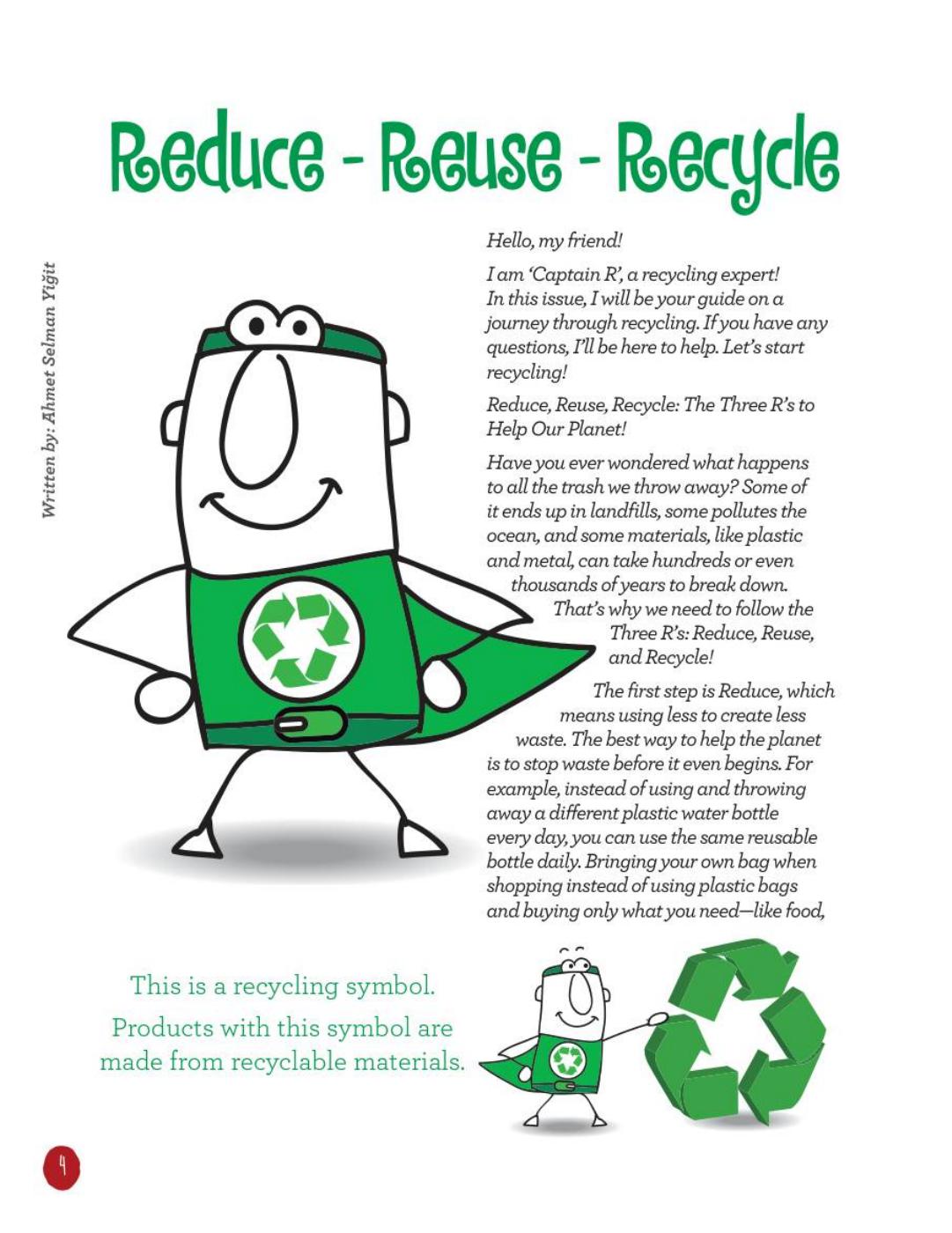
Hello, my friend! I am “Captain R”, a recycling expert! In this issue, I will be your guide on a journey through recycling. If you have any questions, I’ll be here to help. Let’s start recycling!
Have you ever wondered what happens to all the trash we throw away? Some of it ends up in landfills, some pollutes the ocean, and some materials, like plastic and metal, can take hundreds or even thousands of years to break down. That’s why we need to follow the Three R’s: Reduce, Reuse, and Recycle!
The first step is Reduce, which means using less to create less waste. The best way to help the planet is to stop waste before it even begins. For example, instead of using and throwing away a different plastic water bottle every day, you can use the same reusable bottle daily. Bringing your own bag when shopping instead of using plastic bags and buying only what you need—like food, paper, and school supplies—also helps reduce unnecessary waste.
This is a recycling symbol. Products with this symbol are made from recyclable materials.
Page 5
Reuse, Recycle and the Big Trash Problem
The second step is Reuse, which means finding new ways to use things instead of throwing them away. A great way to do this is by repurposing old items. For example, an old T-shirt can become a cleaning rag, and both sides of a piece of paper can be used before recycling it. You can also donate clothes, toys, and books that you no longer need so someone else can use them.
The third step is Recycle, which means turning old materials into new ones. Recycling helps save natural resources like trees, water, and energy. Paper, plastic, glass, and metal should be placed in recycling bins instead of the trash so they can be made into new products. Even food scraps, like banana peels, can be composted to help plants grow. Looking for products made from recycled materials, such as notebooks or backpacks, also supports recycling efforts.
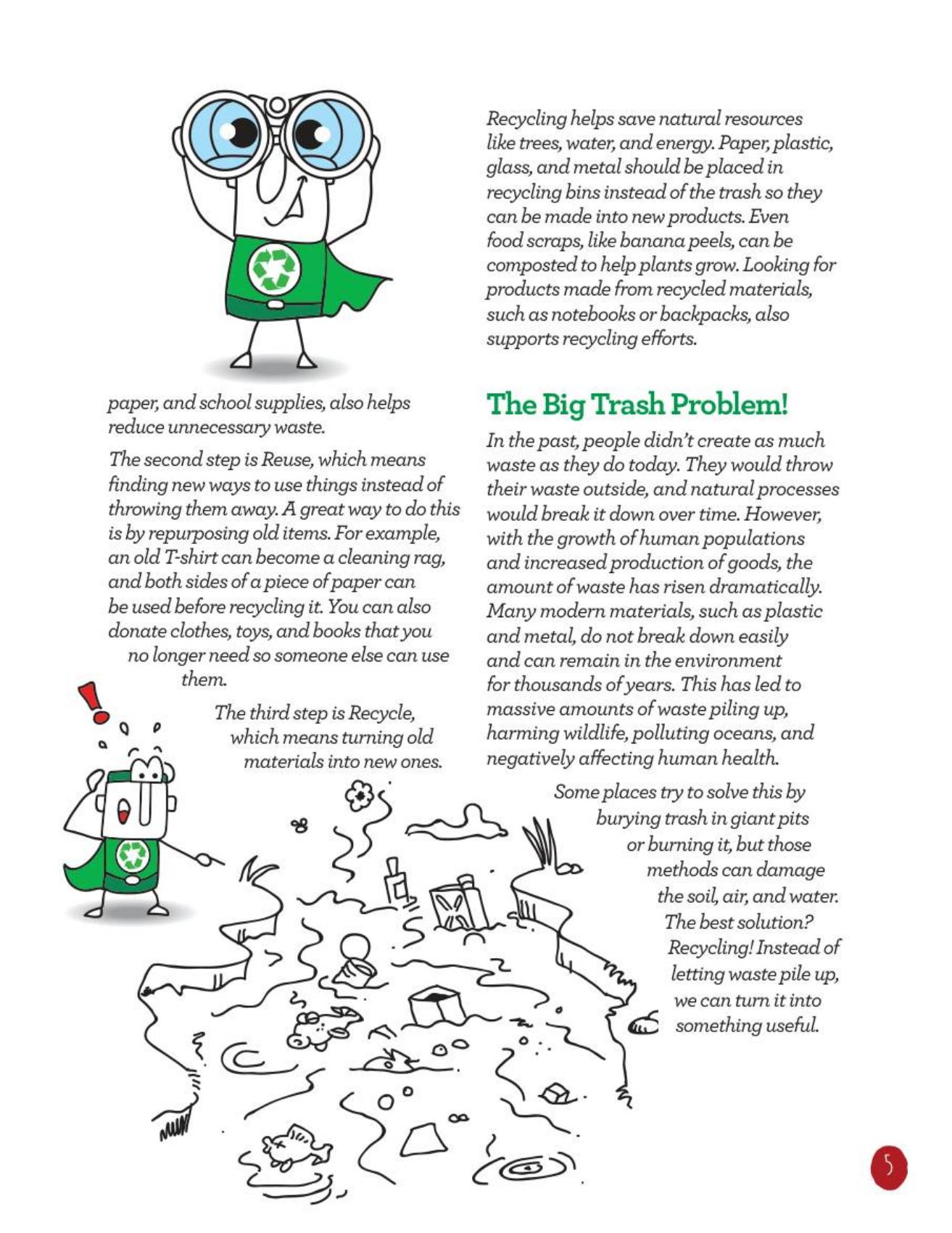
In the past, people didn’t create as much waste as they do today. They would throw their waste outside, and natural processes would break it down over time. However, with the growth of human populations and increased production of goods, the amount of waste has risen dramatically. Many modern materials, such as plastic and metal, do not break down easily and can remain in the environment for thousands of years. This has led to massive amounts of waste piling up, harming wildlife, polluting oceans, and negatively affecting human health.
Some places try to solve this by burying trash in giant pits or burning it, but those methods can damage the soil, air, and water. The best solution? Recycling! Instead of letting waste pile up, we can turn it into something useful.
Page 6
Why Recycling Rocks!
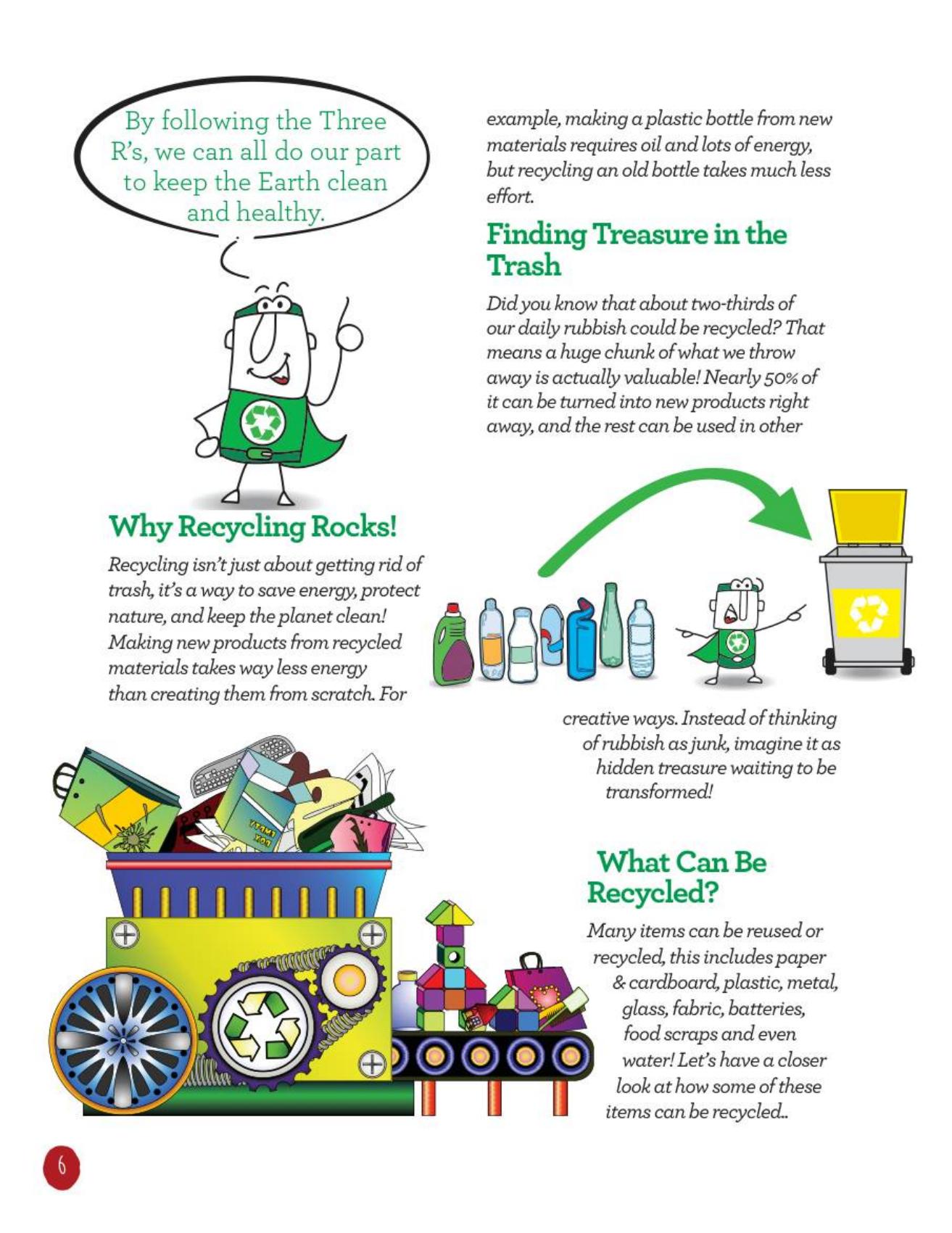
By following the Three R’s, we can all do our part to keep the Earth clean and healthy.
Recycling isn’t just about getting rid of trash, it’s a way to save energy, protect nature, and keep the planet clean! Making new products from recycled materials takes way less energy than creating them from scratch. For example, making a plastic bottle from new materials requires oil and lots of energy, but recycling an old bottle takes much less effort.
Did you know that about two-thirds of our daily rubbish could be recycled? That means a huge chunk of what we throw away is actually valuable! Nearly 50% of it can be turned into new products right away, and the rest can be used in other creative ways. Instead of thinking of rubbish as junk, imagine it as hidden treasure waiting to be transformed!
Many items can be reused or recycled, this includes paper & cardboard, plastic, metal, glass, fabric, batteries, food scraps and even water! Let’s have a closer look at how some of these items can be recycled.
Page 7
Paper, Glass and Water
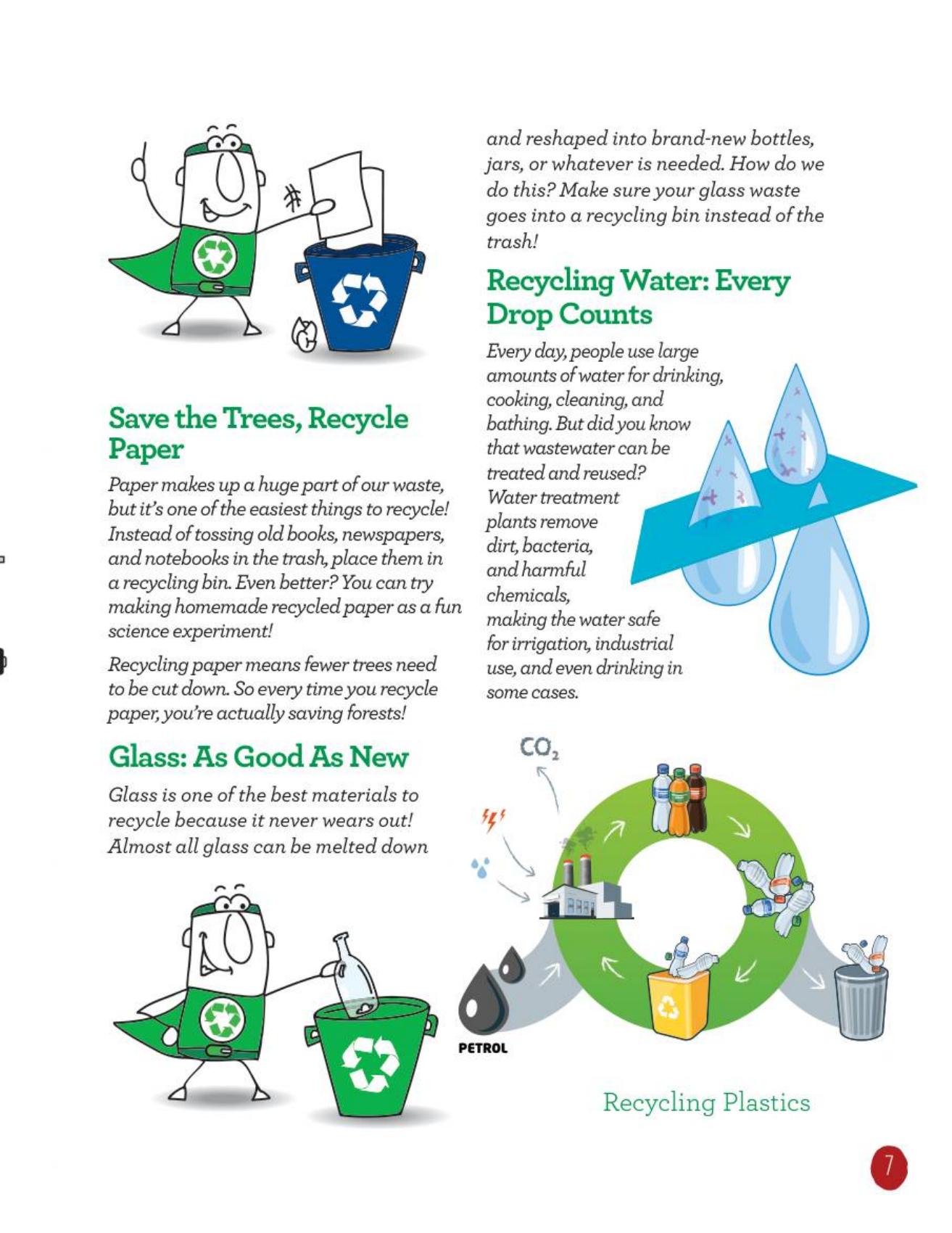
Paper makes up a huge part of our waste, but it’s one of the easiest things to recycle! Instead of tossing old books, newspapers, and notebooks in the trash, place them in a recycling bin. Even better? You can try making homemade recycled paper as a fun science experiment!
Recycling paper means fewer trees need to be cut down. So every time you recycle paper, you’re actually saving forests!
Glass is one of the best materials to recycle because it never wears out! Almost all glass can be melted down and reshaped into brand-new bottles, jars, or whatever is needed. How do we do this? Make sure your glass waste goes into a recycling bin instead of the trash!
Every day, people use large amounts of water for drinking, cooking, cleaning, and bathing. But did you know that wastewater can be treated and reused? Water treatment plants remove dirt, bacteria, and harmful chemicals, making the water safe for irrigation, industrial use, and even drinking in some cases.
Page 8
Kitchen Oil, Batteries and Compost
Another important way to save water is by recycling materials like paper, plastic, and metal. Manufacturing new products requires significant amounts of water, but recycling reduces the need for raw materials and lowers water consumption. By recycling, we help conserve freshwater resources and protect the environment.
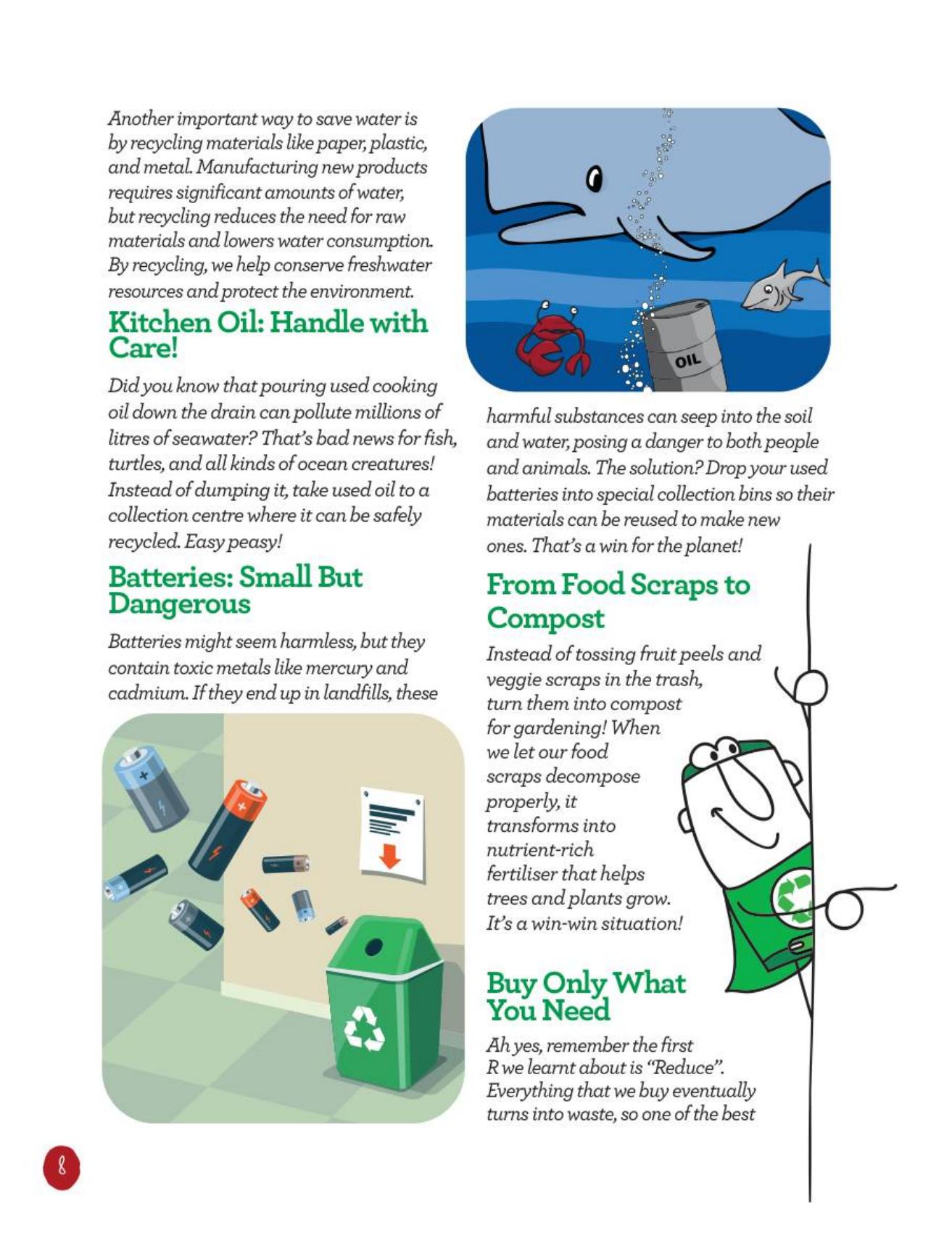
Did you know that pouring used cooking oil down the drain can pollute millions of litres of seawater? That’s bad news for fish, turtles, and all kinds of ocean creatures! Instead of dumping it, take used oil to a collection centre where it can be safely recycled. Easy peasy!
Batteries might seem harmless, but they contain toxic metals like mercury and cadmium. If they end up in landfills, these harmful substances can seep into the soil and water, posing a danger to both people and animals. The solution? Drop your used batteries into special collection bins so their materials can be reused to make new ones. That’s a win for the planet!
Instead of tossing fruit peels and veggie scraps in the trash, turn them into compost for gardening! When we let our food scraps decompose properly, it transforms into nutrient-rich fertiliser that helps trees and plants grow. It’s a win-win situation!
Page 9
A Cleaner, Greener World!
Ah yes, remember the first R we learnt about is “Reduce”. Everything that we buy eventually turns into waste, so one of the best ways to help the planet is to buy less in the first place! Before getting something new, ask yourself: Do I really need this?
Here are some cool ways to reduce waste: Fix broken items instead of tossing them. Use pencils, notebooks, and other supplies until they’re completely finished. Donate clothes and toys instead of throwing them away. Remember, less waste means a happier planet!
Need a quick fix for a broken zip or a missing button? Instead of buying new supplies every time a need comes up, keep a storage box at home for small items that might come in handy. Old buttons, screws, ribbons, and other little bits can be useful for DIY projects or repairs. It’s like having a treasure chest of supplies at the ready!
Let’s all make our best effort to apply the Three R’s in our daily lives. A little effort goes a long way in keeping our world clean and beautiful!
So, next time you’re about to throw something away, think twice and remember Captain R, can it be recycled or reused? Let’s all do our part to protect the planet!
Want the full story?
Subscribe to Camlica Kids